
With OpenClaw: From LLM to robust work system
The public debate about AI often still revolves around a question that has long since become too narrow for businesses: Can ChatGPT write good texts?
Yes, it can. It can write texts, summarize content, structure ideas, condense information and, in many cases, deliver surprisingly useful answers. That is exactly why it has attracted so much attention. And it is also exactly why many discussions unfortunately still focus on the model itself. For businesses, however, the crucial question now starts somewhere else.
It is no longer just about what a language model can achieve in a single prompt. It is about how this becomes a work system that can be used practically within a business. This requires a system that retains context, takes on tasks, uses tools, reuses knowledge, clearly separates responsibilities and still operates within defined boundaries. This is the point at which the debate shifts to a different level.
It is not the individual model that makes the difference, but the system in which it operates.
An LLM can already create significant value in isolation. This is precisely what explains the momentum of the current development. Anyone who has seen how quickly models can condense content, prepare emails, structure information, analyze documents or generate robust first drafts will immediately understand why this technology remains strategically relevant.
At the same time, the limits of a single, non-embedded model in business contexts are clearly defined. An isolated LLM has neither a reliable work and process context nor a permanently defined role within a functional or operational architecture. It has no inherent responsibility, no binding view of prioritized data sources and no built-in control logic for the permissible use of tools, rights and decisions.
Only through the right agentic embedding can a model be configured not merely to respond to inputs, but to work in a context-sensitive, stateful and process-bound way within clearly defined responsibilities, rules and approval mechanisms. At this level, it is not the LLM itself that becomes “autonomous”; rather, its execution is structured through orchestration, governance and system boundaries in such a way that reliable operational contributions can emerge.
What does such a system look like?
Anyone who understands this shift automatically arrives at the system question. Once the focus is no longer on the individual model, but on its reliable embedding, a technical layer is needed to organize precisely that embedding. The term “harness” is increasingly being used for this kind of execution and orchestration layer: a system into which an LLM is inserted as an interchangeable component, and which provides that model with tools, runtime logic, responsibilities, sessions, memory, rules and controlled execution paths.
This is precisely how we use OpenClaw. For us, two aspects are essential: first, the approach is model-agnostic, because different models and providers can be integrated and controlled; second, OpenClaw is open source and self-hostable, which means that the integration logic, governance and system boundaries do not disappear into a black box, but remain transparent and adaptable to the company’s own architecture.
Why this is a management issue for businesses
Once AI is expected to be more than a good chat interface, questions arise that must be answered. These concern responsibilities, approvals, data access, quality assurance and how such a system can be safely controlled in day-to-day operations.
This becomes business-critical at the latest when such systems intervene in workflows, process information further, prepare decisions or support processes that are relevant to customers, revenue, compliance or internal management. From that point on, it is no longer enough for a system to often deliver useful results. It must work reliably, controllably and transparently.
A topic that many are currently dealing with in concrete terms
The fact that these questions are not merely theoretical is also reflected in direct exchange. byte5 is hosting an OpenClaw Meetup in Frankfurt, creating a space for open discussion around the technical and business aspects of AI agent systems. The focus will be on topics such as business use cases, data sovereignty, meaningful automation, costs and the question of how OpenClaw can be moved from experimentation into robust structures.
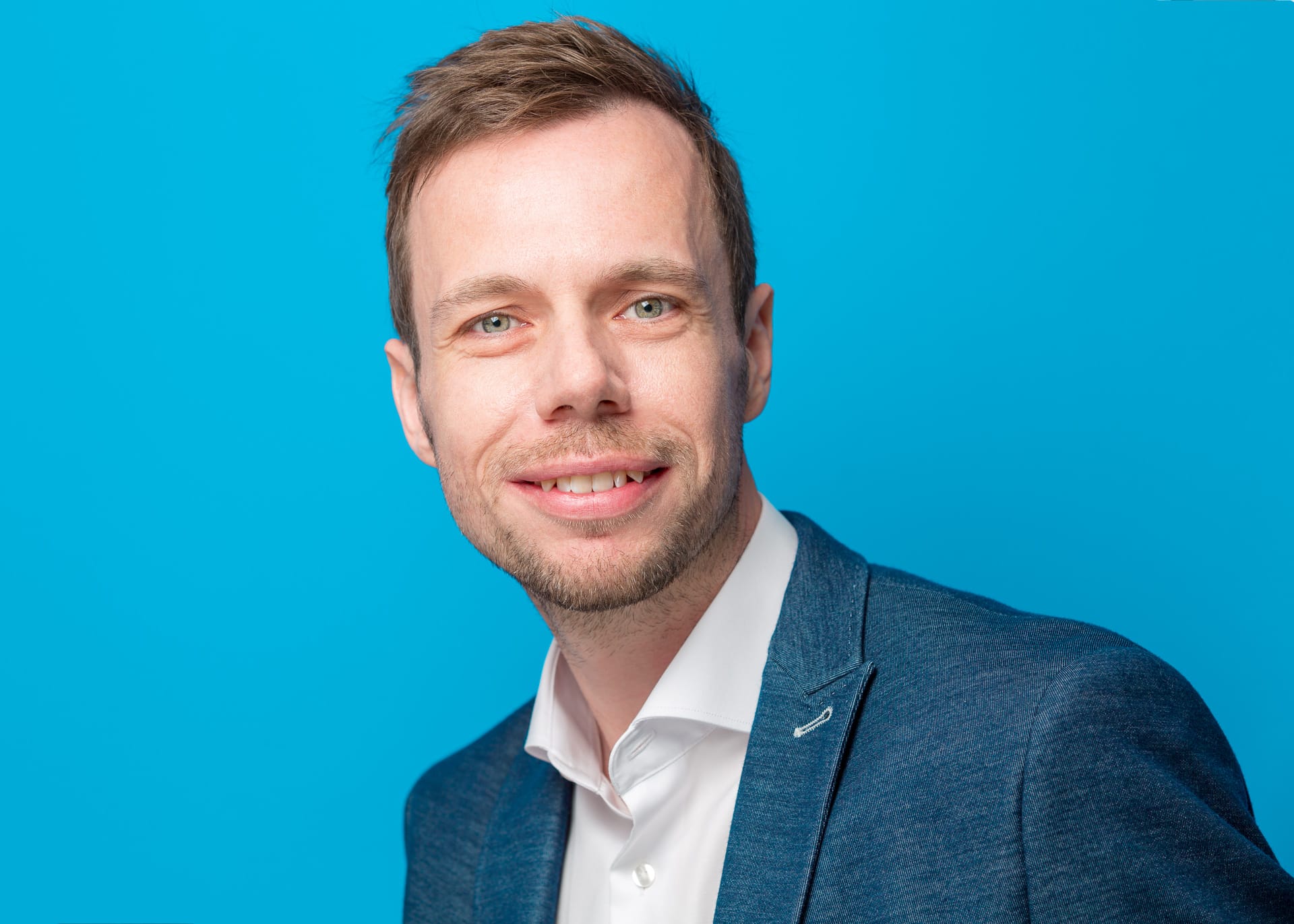
CEO & Founder
Christian Wendler
Christian has been an entrepreneur since 1996 – he has never done anything different and will probably never do so. He founded byte5 in May 2004 as a one-man project. Over 15 years later, the company has multiplied its staff and has long achieved expert status in its niche. Christian is intrinsically motivated to make byte5 even more flexible and family-friendly with innovative measures.
Assess the AI potential for your company
with support from the experts
Contact